
Click-through rate (CTR) is one of the most important metrics in Search Engine Marketing (SEM) and Pay-Per-Click (PPC). It measures the percentage of users who click your ad after seeing it. A strong CTR is a clear signal that your ads are relevant, compelling, and aligned with user intent.
CTR matters because it directly influences Quality Score and Ad Rank, which in turn affect your cost per click (CPC) and where your ads appear on the search engine results page (SERP). Higher CTRs typically lead to lower CPCs, better visibility, and more qualified traffic reaching your site.
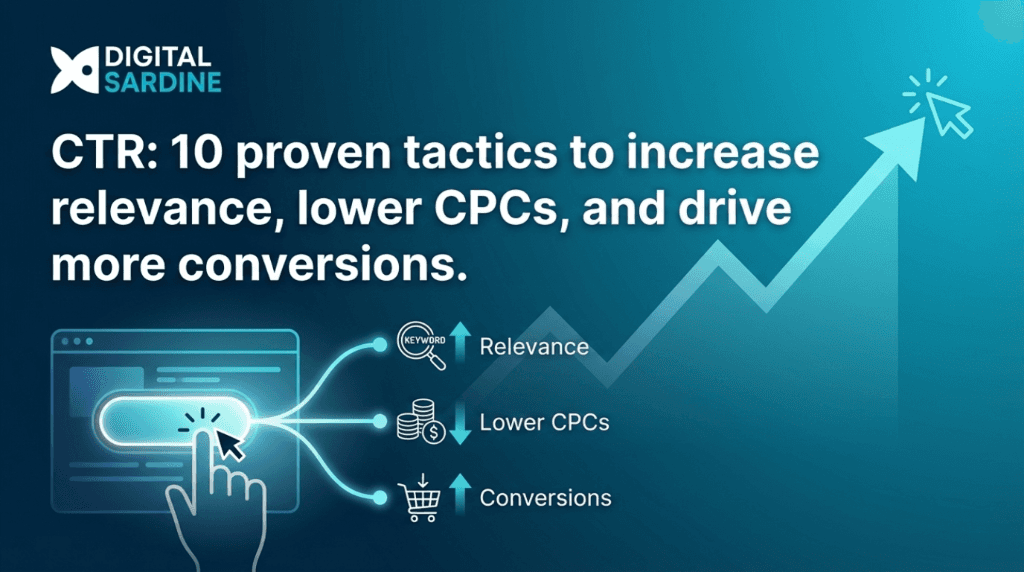
If you want to improve CTR quickly, here are 10 practical strategies you can implement right away:
Add negative keywords to prevent irrelevant impressions.
Review Search Partners performance and exclude them if results are weak.
Use all 15 headlines and 4 descriptions to maximize ad coverage and testing.
Include your top 3 or more high-intent search terms in headlines and descriptions.
Leverage relevant ad extensions that support your value proposition.
Customize ad extensions at the campaign or ad group level whenever possible.
Use dynamic keyword insertion in at least one headline to improve relevance.
Include core keywords in Path 1 and Path 2 of your display URL.
Apply countdown functions for time-sensitive offers or promotions.
Add a clear, specific call to action that aligns with your primary conversion goal.
Small improvements to CTR can compound quickly. Better relevance leads to stronger Quality Scores, lower costs, and more efficient scaling.
Optimize your ads for engagement, test continuously, and treat CTR as a lever, not just a metric. Start applying these tactics today and you’ll see the impact ripple across your entire SEM performance.






Featured contributor on the HubSpot

Sam Lauron Dec 14, 2023
When and How to Build International PPC Campaigns
“One-size-fits-all templates don’t work,” says Flavio Rodrigues, an SEM consultant who runs the consultancy, Digital Sardine. “There are differences in languages and dialects, currencies, user behaviors, and even payment methods,” he adds.