
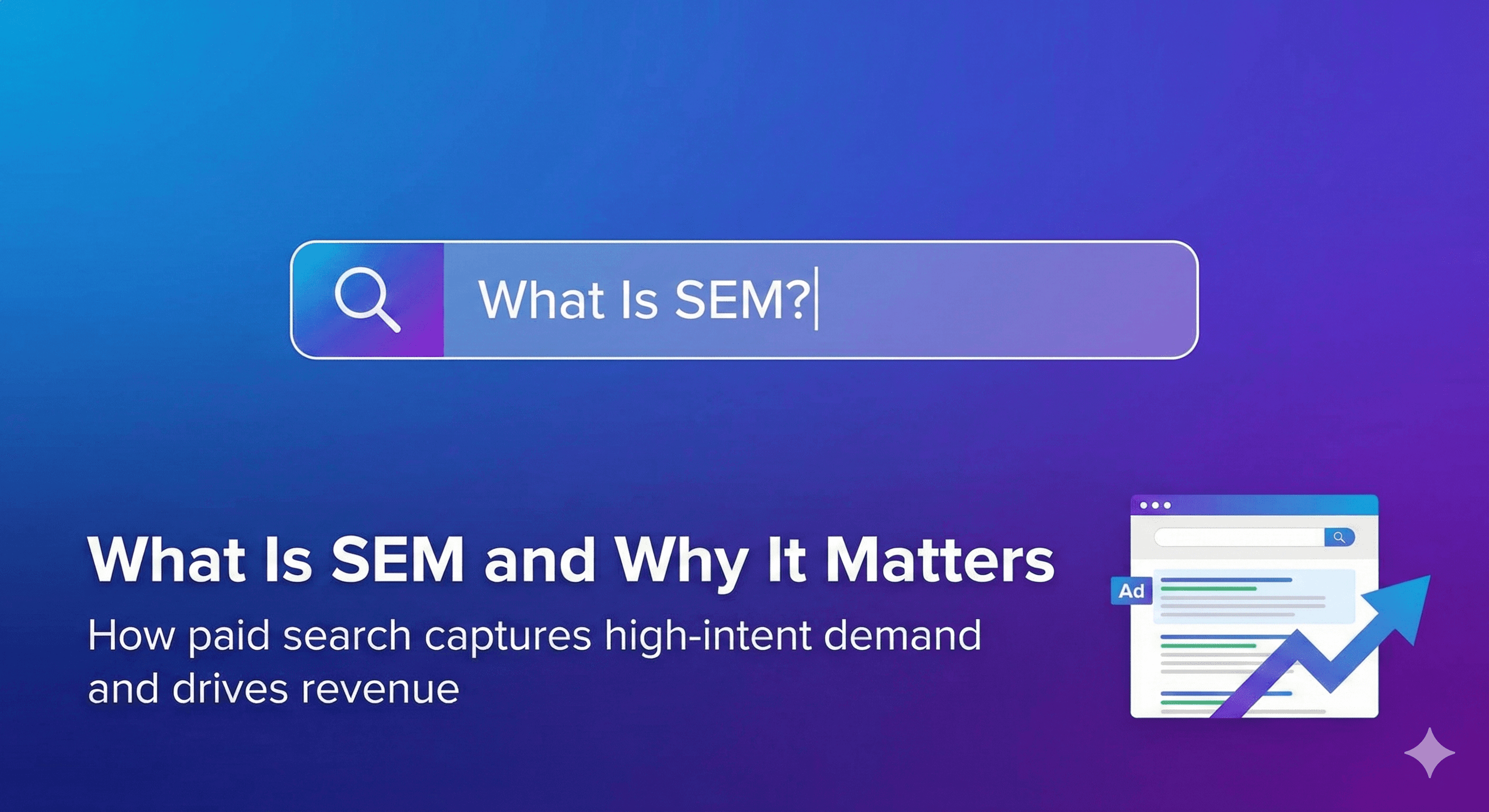
SEM (Search Engine Marketing), also referred to as paid search or SEA (Search Engine Advertising), is a digital marketing strategy focused on increasing visibility in search engine results pages (SERPs) through paid ads. While SEM typically uses a pay-per-click (PPC) pricing model, what makes it unique is the search intent behind the traffic. SEM targets users who are actively searching for specific products, services, or solutions.
It’s important to distinguish SEM from other paid channels such as display advertising or social ads. Platforms like Google Display or Meta Ads can be powerful, but they primarily create demand. SEM captures existing demand by showing ads to users who already know what they are looking for. SEM and SEO both operate within search engines, but they appear in different areas of the SERP and require very different strategies, timelines, and management approaches.
The two primary SEM platforms are Google Ads (formerly AdWords) and Microsoft Advertising (formerly Bing Ads). Depending on the country and market, other search networks may also play a role, but Google and Microsoft account for the vast majority of paid search volume globally.
In SEM, advertisers bid on relevant keywords to display ads at the top or bottom of search results. One of the main advantages of SEM over SEO is speed. SEM provides immediate visibility, allowing brands to appear on page one as soon as campaigns go live. Through a combination of keyword targeting, compelling ad copy, and optimized landing pages, advertisers can reach users at the exact moment they are ready to convert.
Ch
Another major strength of SEM is measurement. Paid search offers robust tracking and reporting, making it possible to evaluate performance by conversions, return on investment (ROI), cost per acquisition (CPA), return on ad spend (ROAS), and many other segmented metrics. This data-driven feedback loop allows for continuous optimization and smarter budget allocation.
While SEM is a paid channel, advertisers maintain full control over spend. Budgets, bids, and targets can be adjusted in real time based on performance. Modern platforms also offer automated bidding strategies designed to optimize toward specific goals such as CPA or ROAS, helping scale efficiently without sacrificing profitability.
In short, SEM delivers immediate visibility, precise intent-based targeting, and deep performance insights. When managed correctly, it is one of the most effective ways for businesses to drive revenue, generate leads, and achieve measurable marketing results.



Featured contributor on the HubSpot
Sam Lauron Dec 14, 2023
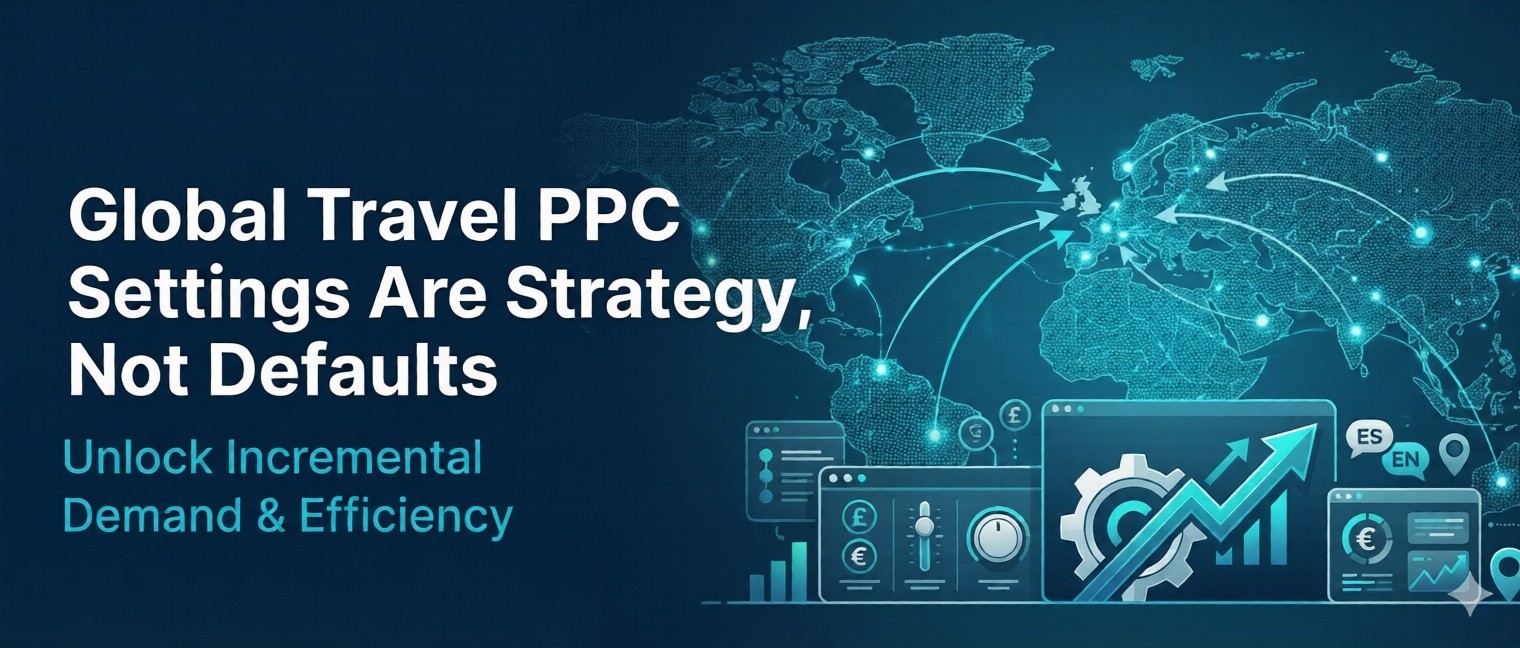
When and How to Build International PPC Campaigns
“One-size-fits-all templates don’t work,” says Flavio Rodrigues, an SEM consultant who runs the consultancy, Digital Sardine. “There are differences in languages and dialects, currencies, user behaviors, and even payment methods,” he adds.